
While watching blockbuster movies, OTT series, or high-budget advertisements, many people assume that all on-screen visual magic is created using VFX. In reality, filmmakers use a combination of Visual Effects (VFX) and Special Effects (SFX)—two distinct yet complementary techniques.
For students, parents, and career aspirants in Indore and across India planning a future in animation, filmmaking, or media production, understanding the difference between VFX and SFX is essential before choosing the right training path.
This detailed guide explains what VFX and SFX are, key differences, real-world examples, career scope, salary potential, and which option is better for beginners.
What Is VFX (Visual Effects)?
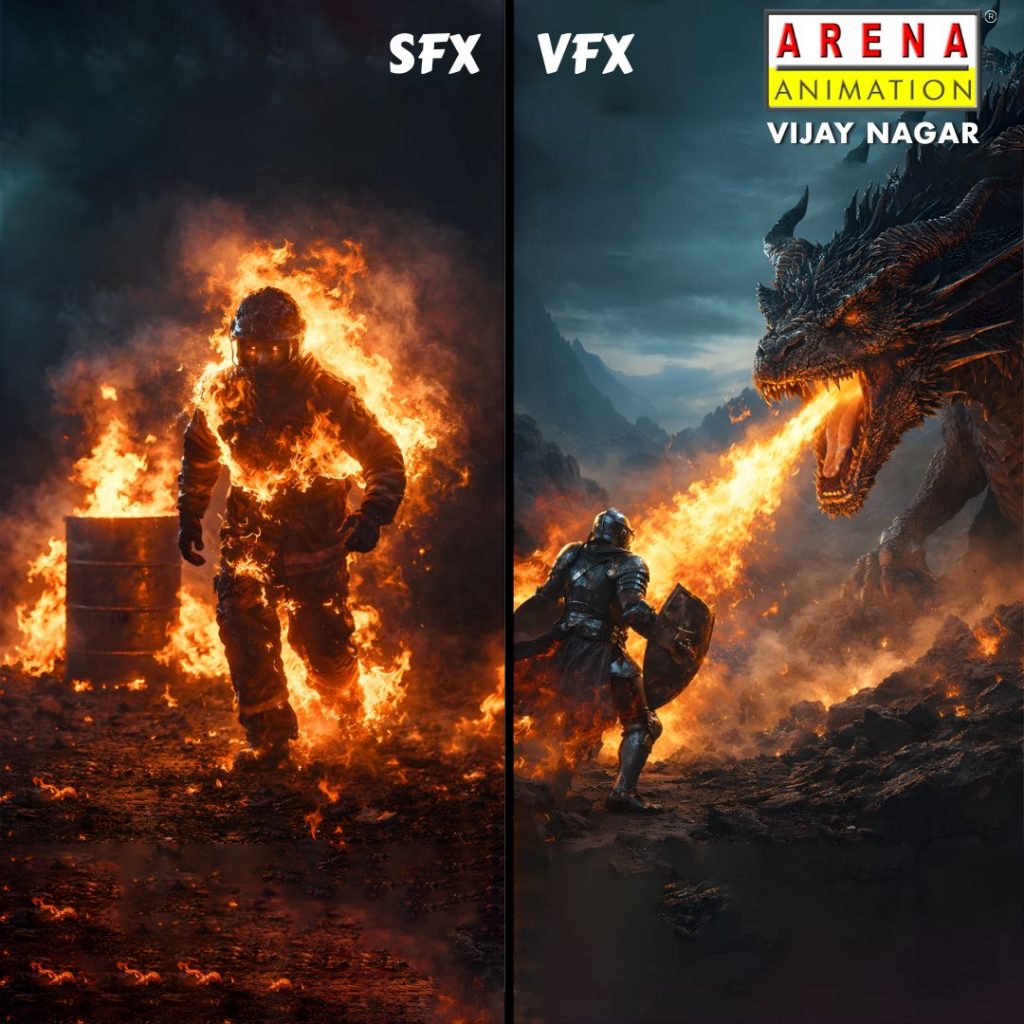
Visual Effects (VFX) refer to imagery that is created, manipulated, or enhanced digitally during post-production using specialized software. VFX allows filmmakers to create visuals that are impossible, dangerous, or expensive to shoot in real life.
VFX work is primarily done inside studios and is widely used in:
- Feature films and OTT series
- Television shows
- Advertising and brand films
- Gaming and interactive media
- YouTube and digital content creation
Common Examples of VFX
- Green screen background replacement
- CGI characters and creatures
- Fantasy environments and cityscapes
- Digital explosions, fire, and smoke
- Weather effects like rain, snow, and storms
Popular VFX Software Tools
- Adobe After Effects
- Nuke
- Maya / Blender
- Houdini
- Unreal Engine
VFX offers high creative freedom, safety, scalability, and revision flexibility, making it a core part of modern filmmaking.
What Is SFX (Special Effects)?
Special Effects (SFX) are practical, physical effects created on set during live shooting. These effects are performed in real time and captured directly by the camera.
SFX is commonly used in:
- Action and stunt-heavy films
- Horror and thriller movies
- On-location shoots
- Live performances and stage shows
Common Examples of SFX
- Real explosions and fire effects
- Smoke, fog, and dust effects
- Prosthetic makeup and creature suits
- Animatronics and mechanical rigs
- Wire work and controlled stunts
SFX requires technical planning, safety protocols, physical setup, and on-set coordination.
Key Differences Between VFX and SFX
| Aspect | VFX | SFX |
|---|---|---|
| Nature | Digital | Physical / Practical |
| Stage | Post-production | During live shooting |
| Location | Studio-based | On-set / Outdoor |
| Safety | High (low physical risk) | Risk-intensive |
| Flexibility | Easy revisions | Limited changes |
| Cost | Scalable with software | Equipment and setup dependent |
Modern films often combine both, but VFX has become more dominant due to creative flexibility and safety advantages.
Real-World Movie & OTT Examples
- VFX Examples: CGI superheroes, fantasy worlds, digital crowds, space scenes, weather simulations
- SFX Examples: Real car crashes, controlled explosions, prosthetic makeup in horror films, mechanical creatures
In most projects, SFX is used for base realism, while VFX enhances or extends the scene digitally.
Career Scope: VFX vs SFX in India
Career Scope in VFX
VFX offers broader and faster-growing career opportunities in India.
Popular VFX Job Roles:
- VFX Artist
- Compositor
- 3D Animator
- Motion Graphics Designer
- Roto & Paint Artist
Salary Range:
- Freshers: ₹2.5 – ₹4.5 LPA
- Mid-level: ₹6 – ₹10 LPA
- Senior professionals: ₹12 – ₹20+ LPA
VFX also supports freelancing, remote work, and international projects.
Career Scope in SFX
SFX careers are highly specialized and usually require on-set experience and apprenticeships.
Common SFX Roles:
- Special Effects Technician
- Prosthetic Makeup Artist
- Pyrotechnics Specialist
- Mechanical Effects Technician
SFX roles are limited in number and often project-based.
Which Is Better for Beginners: VFX or SFX?
For most beginners, VFX is the better career choice, especially in India.
Why VFX Is Better for Beginners
- Can be learned through structured courses
- Studio-based and safer working environment
- High demand across films, OTT, ads, and gaming
- Freelancing and global work opportunities
- Faster career scalability
SFX is better suited for individuals interested in on-set work, mechanics, and physical effects, but it has a steeper entry barrier.
Skills Required for VFX vs SFX
VFX Skills
- Creativity and visual sense
- Software proficiency
- Understanding of animation and compositing principles
- Patience and attention to detail
SFX Skills
- Mechanical and technical knowledge
- Physical stamina
- Safety awareness
- On-set coordination skills
Why Choose Arena Animation Indore for VFX Training?
Arena Animation Indore offers industry-aligned VFX training programs designed to make students job-ready.
Key Advantages
- Practical, software-based learning
- Hands-on projects and assignments
- Portfolio and demo reel development
- Expert mentorship
- Placement assistance in Indore and major cities
Students receive structured guidance that helps them build strong VFX careers without relocating to metros.
Choose the Right Career in Visual Storytelling
If you aspire to work in films, OTT platforms, advertising, gaming, or digital media, VFX provides long-term growth, creative satisfaction, and global opportunities.
Start your professional journey with Arena Animation Indore and transform imagination into a successful creative career.
Enroll today and take the first step toward your future in VFX.
Frequently Asked Questions (FAQ)
No. VFX is digital and done in post-production, while SFX is physical and created on set.
VFX currently offers more job opportunities and growth.
Yes. VFX does not involve physical risk.
No. Creativity and software skills matter more.