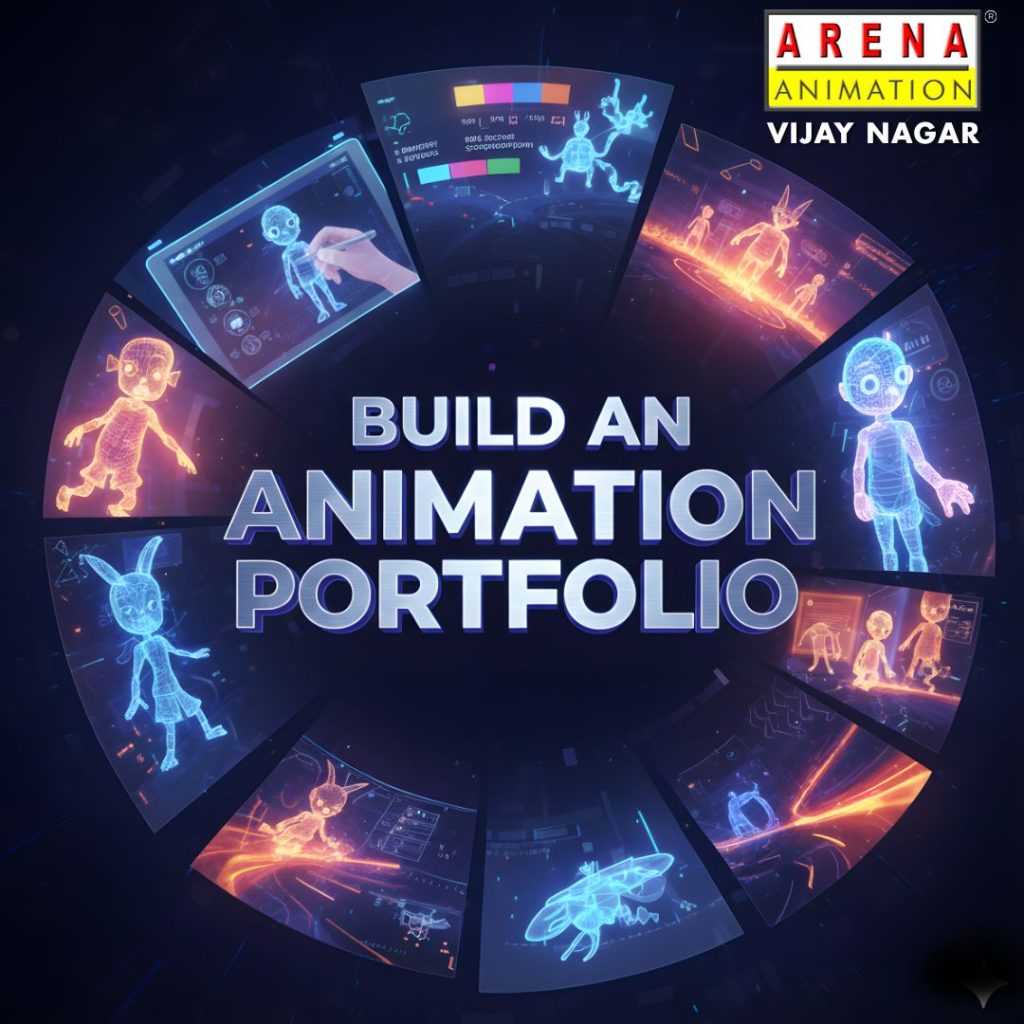

In the Animation and VFX industry, your portfolio matters far more than your degree or marksheet. Studios, production houses, gaming companies, and creative agencies hire artists based on skills, creativity, and practical output, not academic qualifications. For beginners, building an animation portfolio may feel overwhelming—but with the right structure and guidance, it becomes your strongest career asset.
For students and aspiring artists in Indore and Madhya Pradesh, a well-planned portfolio can open doors to opportunities in films, OTT platforms, gaming studios, advertising agencies, and digital media companies—without relocating to metro cities.
This step-by-step guide explains how beginners can build a professional animation portfolio, what recruiters look for, common mistakes to avoid, and how professional training can fast-track success.
What Is an Animation Portfolio and Why Is It Important?
An animation portfolio is a visual resume that showcases:
- Your creative thinking and storytelling ability
- Understanding of animation principles
- Technical and software skills
- Quality of execution and finishing
- Ability to complete projects independently
Recruiters focus on quality over quantity. Even 5–7 strong, well-executed projects can outperform a large but unfocused portfolio. A clean, specialized portfolio immediately communicates your value as an artist.
Choose Your Animation Specialization First
Before creating projects, decide your primary area of specialization. Beginners often make the mistake of trying to include everything.
Popular Animation & VFX Specializations
- 2D Animation
- 3D Animation
- VFX & Compositing
- Motion Graphics
- Game Art & Assets
Your portfolio should clearly highlight one main specialization, with optional supporting skills. This helps recruiters quickly identify where you fit in their production pipeline.
What Recruiters Look for in a Beginner Portfolio
Studios hiring freshers typically evaluate:
- Strong fundamentals (timing, spacing, composition)
- Clean animation and smooth motion
- Logical shot progression
- Basic storytelling and visual clarity
- Software proficiency relevant to the role
They do not expect perfection—but they expect clarity, effort, and growth potential.
What to Include in a Beginner Animation Portfolio
1. Fundamental Animation Exercises
Fundamentals prove that you understand animation principles. Include:
- Ball bounce (weight and timing)
- Pendulum and overlap exercises
- Walk and run cycles
- Basic acting shots
These exercises are critical for 2D, 3D, and VFX beginners.
2. Personal and Practice Projects
Personal projects show creativity and initiative. Examples include:
- Short animated clips
- Simple storytelling scenes
- Product animation shots
- Recreated movie or ad shots (with originality)
Recruiters value original interpretation, not copied tutorials.
3. Software Skills
Clearly mention and demonstrate tools you have used, such as:
- After Effects
- Blender / Maya
- Toon Boom / Adobe Animate
- Premiere Pro
- Nuke
Only include software you can confidently work with.
4. Demo Reel (Most Important)
Your demo reel should be:
- 30–90 seconds long
- Start with your best work first
- Clean, fast-paced, and engaging
- Free from weak or unfinished shots
End the reel with your name, role, and contact details.
Step-by-Step Process to Build Your Portfolio
Step 1: Learn Animation Fundamentals
Understand core principles such as timing, spacing, squash and stretch, anticipation, and follow-through. Fundamentals matter more than advanced software skills.
Step 2: Practice with Purpose
Avoid random tutorials. Instead:
- Set clear goals for each project
- Focus on improving one skill at a time
- Maintain consistency in quality
Step 3: Work on Live or Simulated Projec
Industry-style projects prepare you for real studios. These may include:
- Brand explainer videos
- Short film sequences
- Game asset creation
- Ad-style motion graphics
Step 4: Take Feedback and Refine
Regular feedback from mentors or industry professionals helps you:
- Identify weak areas
- Improve shot quality
- Avoid beginner mistakes
Iteration is key to portfolio excellence.
Step 5: Present Your Portfolio Professionally
Upload your work on recognized platforms:
- YouTube or Vimeo (demo reels)
- ArtStation (3D, VFX, game art)
- Behance (motion graphics, 2D)
Use clear titles, short descriptions, and proper categorization.
Common Portfolio Mistakes Beginners Must Avoid
- Adding weak or unfinished projects
- Copying tutorials without originality
- Poor lighting and rendering
- Ignoring fundamentals
- Overcrowded or lengthy demo reels
A focused portfolio with fewer strong pieces always performs better.
How Often Should You Update Your Portfolio?
Your portfolio should be updated every 3–6 months, or whenever you complete a better-quality project. Remove older or weaker work as your skills improve.
Why Professional Training Makes a Big Difference
Professional institutes like Arena Animation Indore follow a portfolio-driven learning approach. Training focuses on:
- Industry-standard assignments
- Structured skill progression
- Expert mentorship and feedback
- Demo reel planning and execution
- Career guidance and placement support
This helps students become job-ready without relocating to metro cities.
Build a Job-Ready Animation Portfolio in Indore
If you are serious about an animation career, your portfolio is your gateway to the industry.
Start with expert guidance, hands-on projects, and professional demo reel support at Arena Animation Indore.
Enroll today and turn your creativity into a successful animation career.
Frequently Asked Questions (FAQ)
Yes, if the quality is strong.
No. Personal and practice projects are accepted.
Every 3–6 months.
Not mandatory for 3D, VFX, or motion graphics.